
The Story
Having made a good start on addressing the behaviour of the grownups, it was clear that the school needed to have a close look at how we managed the behaviour of the pupils. It didn’t take long for me to realise that a large number of staff saw the arrival of the new Acting Headteacher as an opportunity to ‘offload’ their most challenging children. And it also became clear that this ‘offloading’ had become an embedded part of the school’s culture.
Although children were frequently turning up at my office, as I moved around the school it was very apparent that children were even more frequently ‘exited’ from their classrooms, usually to nowhere in particular. I would often find a child standing outside a classroom door or wandering in a corridor.
Something had to change and it started with me returning every child I found into their classroom, with a smile on my face, saying something along the lines of,
“Hello Miss/Sir. I just found Tony outside so I’ve brought him back into class for you.”
After a few weeks of this I held a staff meeting where I made it clear that this was not going to happen any more and, at the same time, had a word about the number of children being sent to my office. It went along these lines,
“If you send a child to me then I will work with them and build a relationship with them and they will behave for me, but will probably not behave for you when I send them back to you. If you want them to behave for you then you need to be working with them and building that relationship with them yourself.”
At the same time, I stopped the practice of having a breaktime and lunchtime detention room – yes we had children sitting facing walls doing lines…
Instead I introduced the idea of a sanction free behaviour policy, explaining to the staff that when something goes wrong behaviourally it becomes a learning opportunity, just like everything else, and it is the informed conversation between the child and the adult that is the valuable bit.
There were lots of different opinions expressed about this by the staff team (including the Leadership Team) but, as I said last time, you do not reach a consensus by sitting around a harmonious table, so lots of talking and lots of listening happened and compromises were achieved, but always with the same goal in sight.
For example, of course, if a child in your class wastes time in the lesson and fails to complete the work then you are fully entitled to keep them with you for some of their breaktime or some of their lunchtime (never all of either). But the reason for keeping them in is so that you can support them in completing it, or at least making progress with it. Plus that child during that time is your personal responsibility and you need to remember that this is also an opportunity to continue to build your relationship with them.
This is because we wouldn’t tolerate:
Child: “I don’t understand how to do this long division.”
Teacher: “Go and sit on that chair on your own until you have worked it out for yourself.”
So why would we think that approach would work when dealing with a child’s social and emotional needs?
Children behave best when they do the right thing because it is the right thing to do, not because they are scared of the consequences of doing the wrong thing. And, as with most things, taking this approach to behaviour management can take more time and effort, especially when initially introducing it to your school and ensuring it is embedded.
NB – As an aside, the same goes for suspensions and exclusions. To me they are not just the easy option, they are the professionally lazy option. Because they are more about responding to the needs of the adults than they are about understanding the needs of the children and young people.
And I kept on reinforcing that:
“It is the relationships we build, not the sanctions we impose, that make the difference”
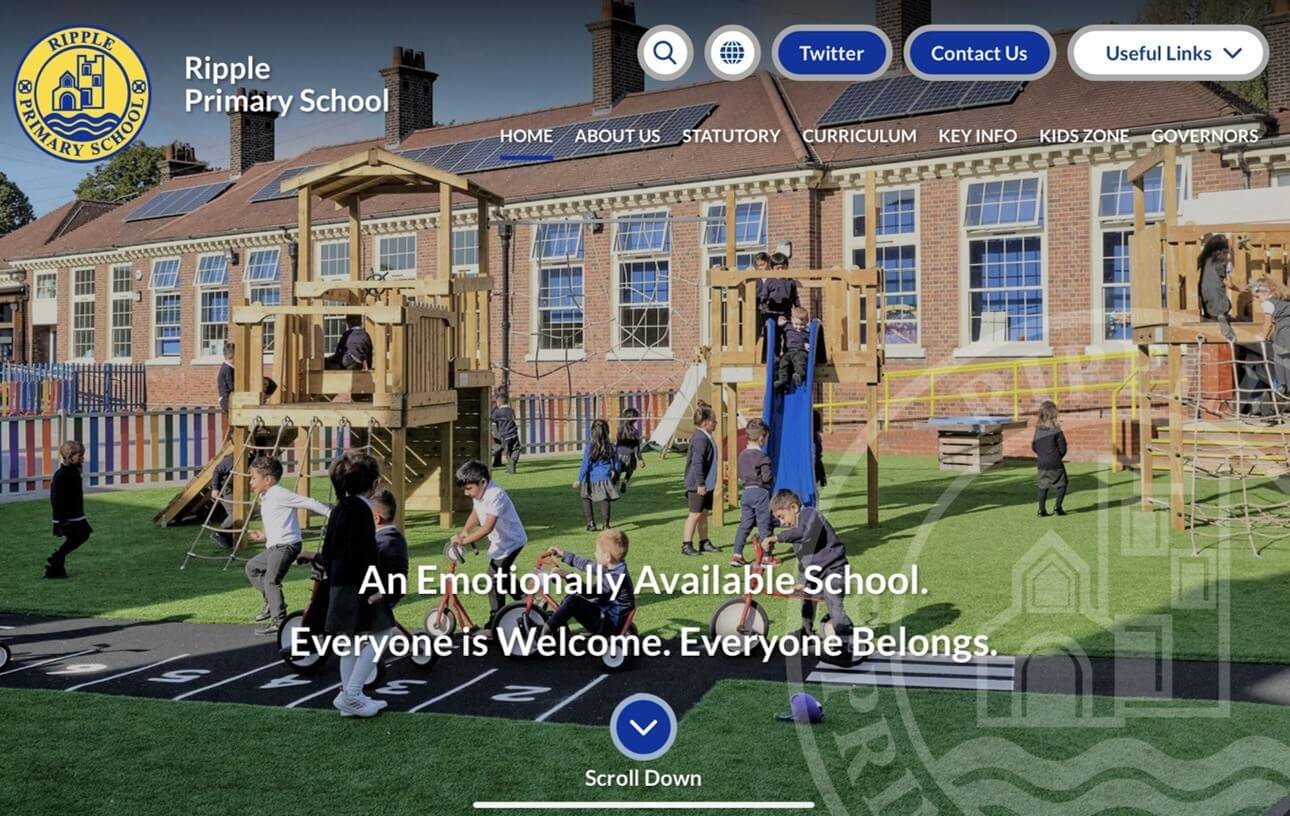
This culture change underpinned what ultimately became our ‘Behaviour Through Nurture and Relationships Policy’.
In building these relationships, the language that we consistently use across the school is vital too. We always tell the children how proud we are of them when they achieve. But it is even more important to be caring in the language we use when things don’t go right.
Back when I arrived at the school, if you asked a child who had done something wrong how they thought it had made you feel, they would invariably say,
“Angry” because they were fearful of the consequences of their behaviour.
After a while they became much more likely to say,
“Sad” or “Disappointed” because we had made ground in embedding our shared values and they wanted to ‘do the right thing because it is the right thing to do’.
These days they are most likely to say,
“Worried about me” which I think speaks volumes about how far we have come.
Most importantly they know that, when things don’t go right, there will be someone who will talk to them about and help them to learn from it without imposing a punishment. And, if they are in crisis, there will be someone in our Emotionally Available School with the time, space, empathy and caring, in a place of safety and trust, to help them to de-escalate and re-regulate (and to help them to develop their ability to de-escalate and re-regulate themselves).
I am confident that we have achieved a whole school consensus on this because behaviour in our school (child and adult) is very good.
And, as I write this, I am very proud to be able to say that I can’t remember the last time I heard a member of staff raise their voice to a child (or another adult for that matter) at our school.
Throughout introducing all of this I consistently referred back to our Core Foundations of ‘Professional Generosity’ and ‘Professional Maturity’ (see Part 2 if you have just jumped in here) along with “smothering them with love and kindness” (likewise, see Part 1 if you have just jumped in here), because there is nothing like maintaining a consistent message. And your winning argument is always,
We are going to do it this way because it is the best way for the children and not because it is the easiest way for the grownups.
What I have not mentioned yet is that when I arrived as Acting Headteacher in July 2005 it wasn’t to Ripple Primary School, it was to Ripple Junior School, a 360 pupil, 3 form entry school that was on the same site as Ripple Infant School (which was under separate governance). By 2009 we had amalgamated to become Ripple Primary School with 720 pupils. And then in 2010 we expanded on to a second site to reach a school population of 1,200 by 2015.
And that meant embedding the ethos with firstly a whole new staff and them maintaining and extending while also securing parity as one school on two sites.
More about that next time…
Want to find out more and get regular updates about what is happening in the world of the Emotionally Available School? Then sign up to the newsletter.