
The Story
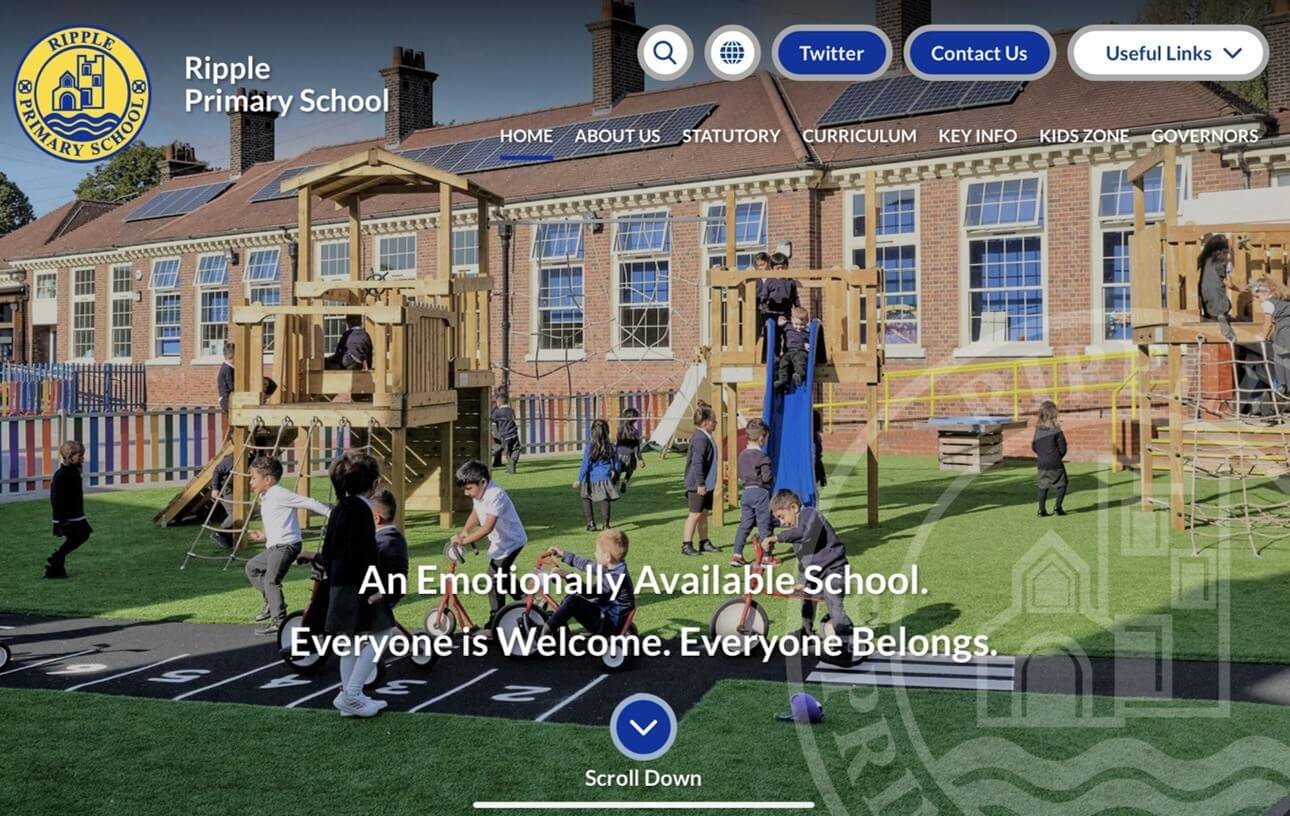
I have spent my whole career, starting in 1988, as a teacher in the London Borough of Barking and Dagenham and have been Headteacher at Ripple Primary School in central Barking since 2005. Ripple is a 950 pupil maintained primary school that is split over two sites. We have three LA funded ARPS at the school – ASD, CMLD and SEMH (behaviour recovery with a brief to reintegrate back into the home school within three terms).
Barking and Dagenham is not the easiest place to work in education. The level of deprivation (6th most deprived borough in England), the high mobility of our population, the broad and rapidly changing diversity of our community (in my own school EAL is 86% and that is spread across 72 different languages) are just a few of the factors that contribute to the pressures of maintaining the highest possible standards of education, care and support for our pupils and our school community.
But throughout my whole career I can honestly say that I have woken up every single morning looking forward to going to work. And as Headteacher at Ripple I know I have the best job in the world, and I wouldn’t want to do it anywhere else.
My borough’s children and their families have the power to do that to you.
When I arrived at Ripple in 2005 it was a school in a very fragile position that had suffered the long-term illness and then death of its Headteacher. The staff team, without secure leadership, had begun to splinter and the children’s attendance, behaviour and attainment was not great. It wasn’t the happiest of schools by a long way.
I very quickly realised that I was working with a group of people who were not a cohesive team and they’d had no clear leadership for well over a year and nothing happens without leadership.
They had become cliquey and bitchy. The staffroom was mostly empty because it didn’t feel like the safe space for staff that it should be. Everyone walked about with their heads facing the floor. Parents didn’t feel welcome. And it was clear that some of the grown-ups working at the school didn’t even like children.
My Deputy, who arrived at the same time as I did, said to me soon after we arrived, “What are we going to do? Where do we start?” And I responded that we would start with the grown-ups and that we would, “smother them with love and kindness and that those people who wanted to be happy would stay and those people who didn’t want to be happy wouldn’t be able to take it and would go away and be unhappy somewhere else.”
It started very simply by requiring all of the grown-ups in the school to walk with their heads held high and to greet everyone they encountered with a smile and a “Good morning,” whether that be colleagues, children or their families. Regardless of how you were feeling yourself, it was vital for everyone you encountered to feel welcomed into that space.
And when I saw practice that I felt was unacceptable I tried to tackle it in as positive a way as possible, mostly with a mildly incredulous smile on my face… “You did what? Why?” And always one-to-one. Never with an audience. And always as kindly as possible. And I discovered how powerful kindness is, and how kindness is arguably the most powerful tool in a school leader’s toolbox.
And I was heartened by how far just doing that actually improved things. And how quickly the grumpy cynics decided that they couldn’t stand being anywhere near me any longer and decided to pursue their professional futures in other schools. And after around eighteen months, most of the unhappy people had indeed left.
Of course, there was a bit more structure than that. I did have a plan…
Want to find out more and get regular updates about what is happening in the world of the Emotionally Available School? Then sign up to the newsletter.